
Suspension & Brakes
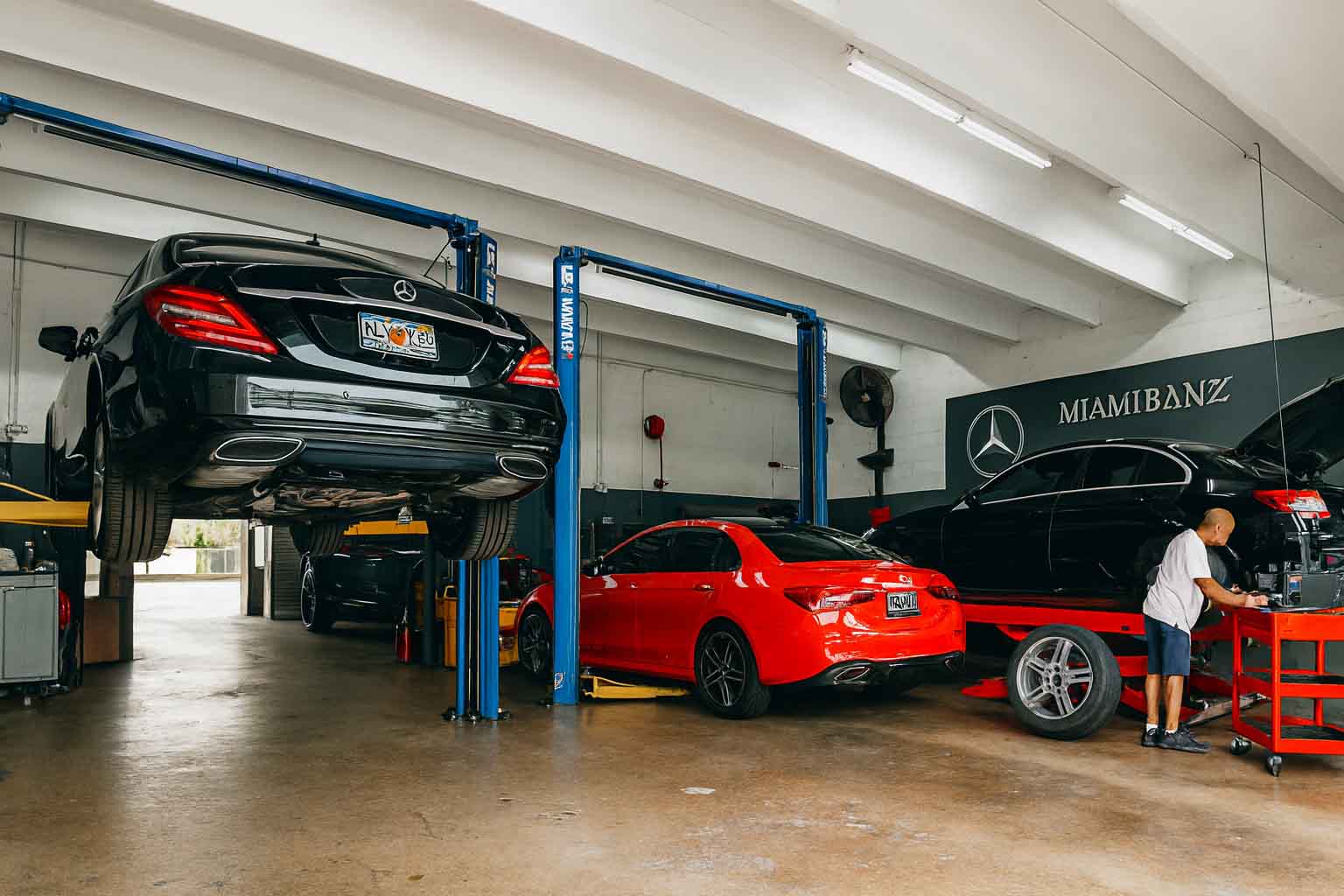
MERCEDES AIRMATIC SUSPENSION & BRAKE REPAIR IN MIAMI
Suspension is how the car feels. When an Airmatic Mercedes starts sitting low overnight or thumping over speed bumps, it rarely fixes itself — and it changes how the car stops as well as how it rides.
AIRMATIC IS EVERYDAY WORK HERE
Air struts, compressors, valve blocks and ride-height sensors, diagnosed on the factory tool rather than by guesswork. Ride height is calibrated properly after every strut change.
Brakes are the other half of the same conversation: pads, rotors, calipers, ABS and ESP faults, and fluid that Miami humidity spoils faster than most owners expect.
Airmatic
Struts, compressor, valve block
Ride Height
Calibrated on the factory tool
Brakes
Pads, rotors, calipers, ABS
Fluid
Flushed on a Miami interval
HOW MIAMI’S CLIMATE DAMAGES MERCEDES SUSPENSION & BRAKES
Air-strut bladder fatigue
Heat and UV age the rubber. Bladders crack, the car sits low overnight, and the compressor runs itself to death trying to keep up.
Compressor desiccant saturation
Humidity saturates the dryer. Moisture reaches the valve block, and the system starts failing as a whole rather than in one place.
Caliper slide corrosion
Salt air seizes slide pins. Pads wear unevenly, the car pulls under braking, and rotors go early.
SIX MERCEDES SUSPENSION & BRAKE WARNING SIGNS TO ACT ON NOW
Sitting low in the morning
A leaking air strut, or a valve block that will not hold pressure overnight.
“Vehicle Too Low” or “Visit Workshop”
The car has already logged the fault. A scan tells us which corner and why.
Knock or clunk over speed bumps
Control arm bushings, top mounts, or a failing strut.
Pulling under braking
Usually a seized caliper slide, sometimes a collapsed flexible hose.
Brake judder at highway speed
Rotor thickness variation. Machining rarely lasts on a modern Mercedes; replacement does.
Wheel-bearing whine
A hum that changes as you steer. Inexpensive now, expensive if ignored.